1. The Reality: Employee Experience Is Always Moving
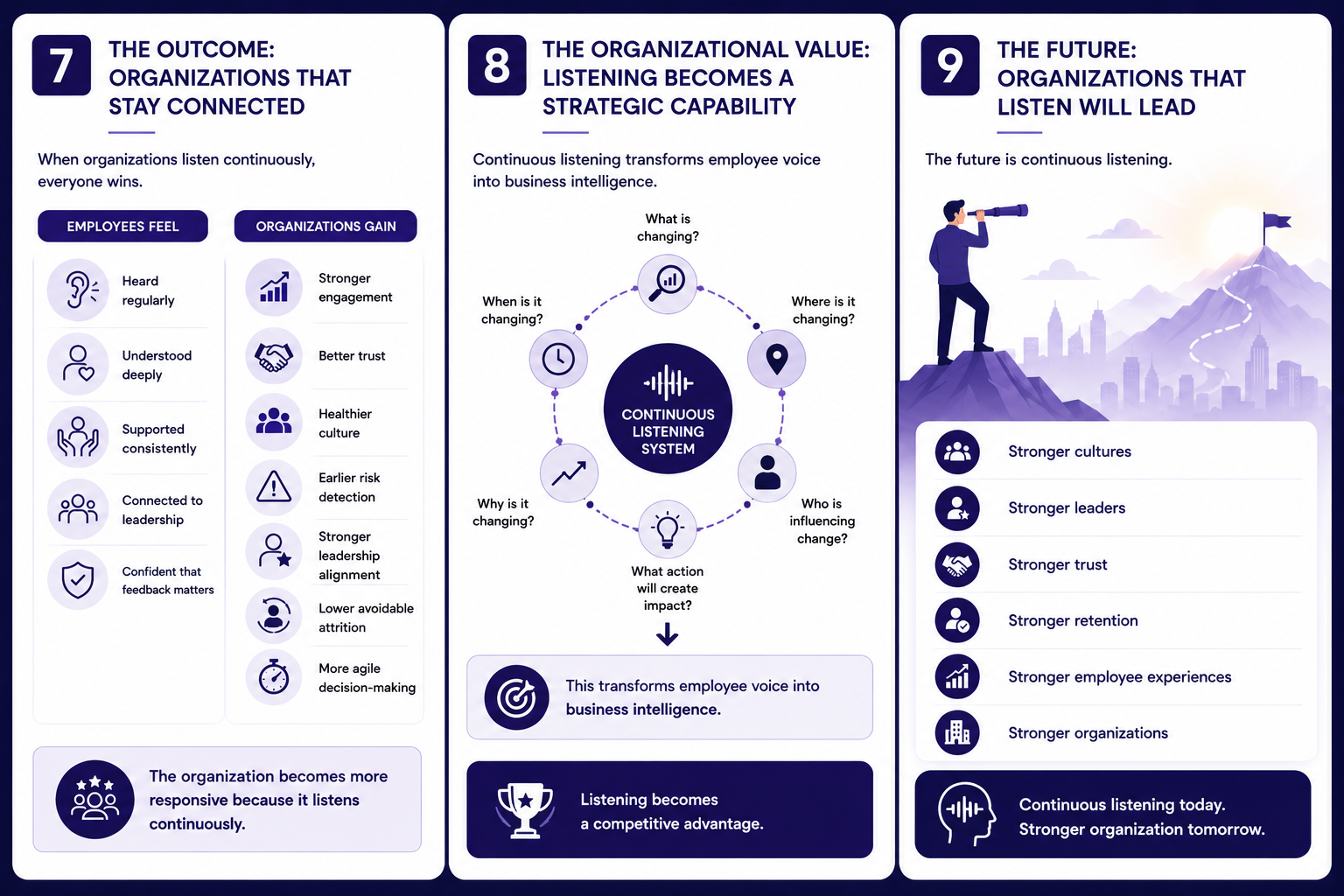
Organizations are constantly evolving.
New leaders step in.
Teams restructure.
Business priorities shift.
Workloads change.
Employee expectations grow.
Culture adapts.
And through all of this, one thing keeps moving quietly beneath the surface:
employee sentiment.
How employees feel about work is never static.
Confidence changes.
Motivation rises and falls.
Trust builds—or weakens.
Engagement strengthens—or quietly slips.
Belonging grows—or disconnect begins.
The workplace experience is dynamic.
Which means understanding employees cannot be treated as a once-a-year activity.
Listening must move at the pace of employee experience.
2. The Dilemma: Annual Surveys Capture Moments, Not Movement
For years, organizations have relied on traditional listening methods:
- Annual engagement surveys
- Occasional pulse surveys
- Performance review discussions
- Exit interviews
These tools are useful—but they capture snapshots, not the full picture.
And employee experience is not a snapshot.
It is constantly changing.
A policy change can affect trust.
A new manager can improve team morale.
Workload pressure can increase burnout risk.
Career stagnation can reduce motivation.
A strong leadership intervention can rebuild confidence.
These shifts happen in real time.
If organizations listen only occasionally, they hear what happened—not what is happening.
And that creates delayed action.
3. The Shift: From Periodic Feedback to Continuous Listening
Forward-thinking organizations are making an important shift:
From asking:
“What do employees think right now?”
to asking:
“How is employee experience changing over time?”
That is the foundation of a Continuous Listening System.
It is not built around one survey.
It is built around an ongoing rhythm of listening.
A rhythm that captures employee voice continuously, consistently, and intelligently—so organizations always stay connected to workforce sentiment.
Listening becomes part of how organizations operate.
Not just how they measure.
4. The Answer: What Is a Continuous Listening System?
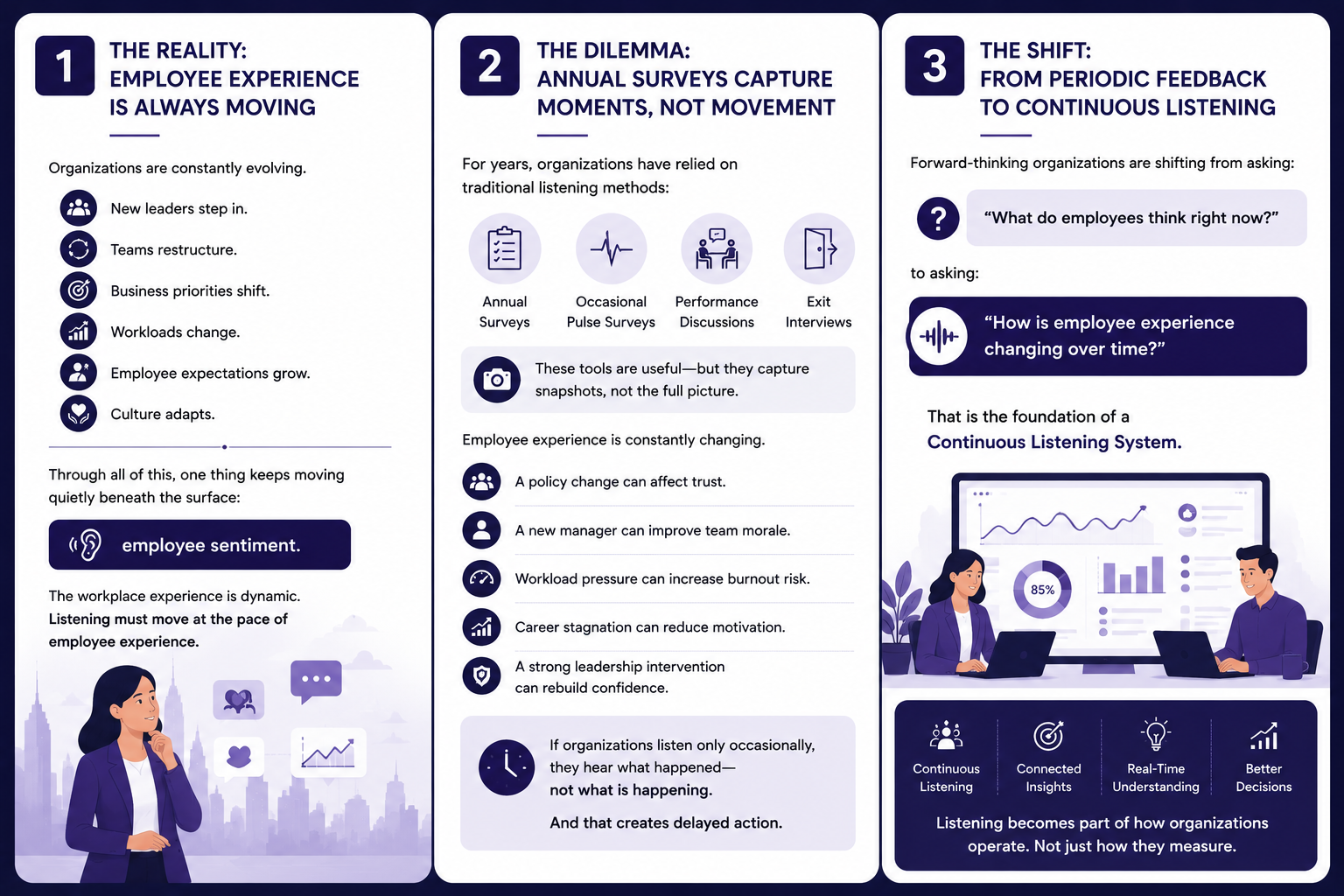
A Continuous Listening System is a structured framework that captures employee voice through regular, connected listening moments across the organization.
Instead of waiting for annual surveys, organizations continuously gather insight through:
- Pulse surveys
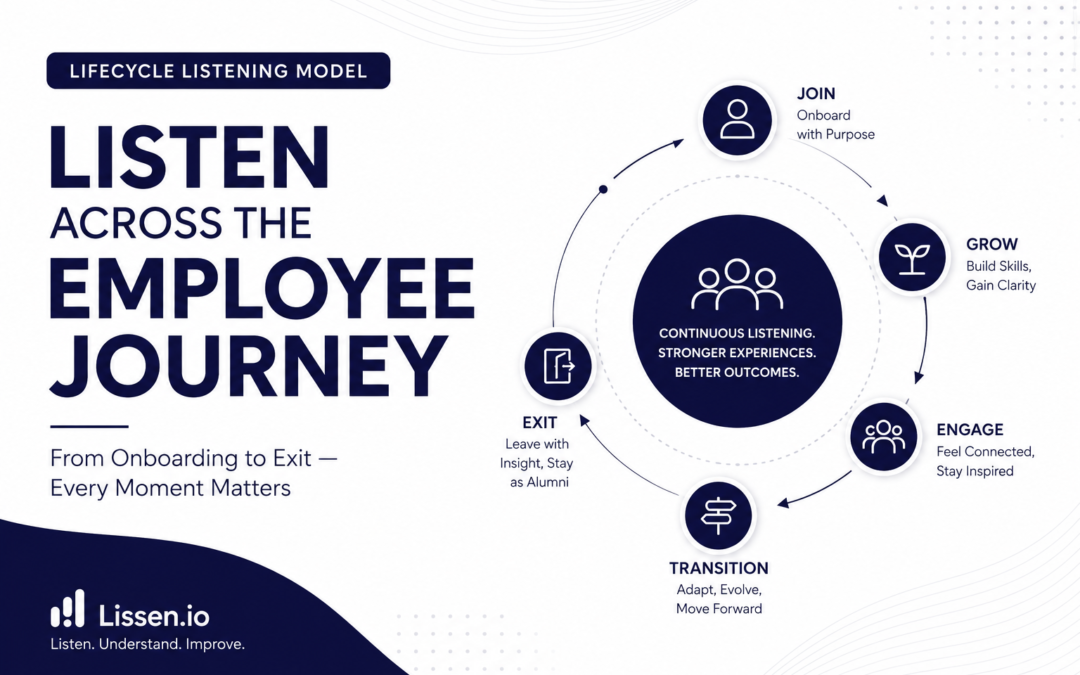
- Lifecycle listening moments
- Leadership feedback loops
- Manager effectiveness assessments
- Team health checks
- Engagement trackers
- Change & transition listening
- Exit intelligence
Together, these create a live view of employee experience.
Organizations begin understanding:
- how sentiment is changing
- where trust is growing
- where friction is building
- what teams need most
- which leaders create strong employee experiences
- what signals predict disengagement or attrition
Listening becomes continuous organizational intelligence.
5. Why Continuous Listening Matters
When organizations listen continuously, they can understand:
5.1 Engagement Trends
Not just engagement scores—but how engagement evolves.
5.2 Leadership Impact
How leaders shape trust, motivation, and team experience.
5.3 Manager Effectiveness
Whether managers are enabling people to succeed.
5.4 Change Readiness
How employees are experiencing transformation and uncertainty.
5.5 Retention Signals
Early signs of disengagement before attrition happens.
5.6 Employee Needs in Real Time
What employees need now—not what they needed months ago.
This creates faster insight and better decisions.
6. How to Build a Continuous Listening System
A strong continuous listening model follows three principles:
6.1 Create a Listening Rhythm
Listening should happen consistently—not randomly.
Examples:
- Monthly pulse listening
- Quarterly deep listening
- Lifecycle listening checkpoints
- Change-event listening
- Leadership feedback cycles
Consistency builds intelligence over time.
6.2 Connect Signals Across the Organization
Do not treat feedback as isolated surveys.
Connect insights across:
- teams
- managers
- leadership
- employee lifecycle stages
- engagement themes
- business change moments
This creates a complete employee listening ecosystem.
6.3 Turn Listening into Organizational Action
Continuous listening should improve:
- leadership capability
- manager effectiveness
- employee experience design
- communication strategies
- retention planning
- culture building
- organizational trust
Listening should drive visible action.
That is what builds credibility.
7. The Outcome: Organizations That Stay Connected
When organizations build a Continuous Listening System:
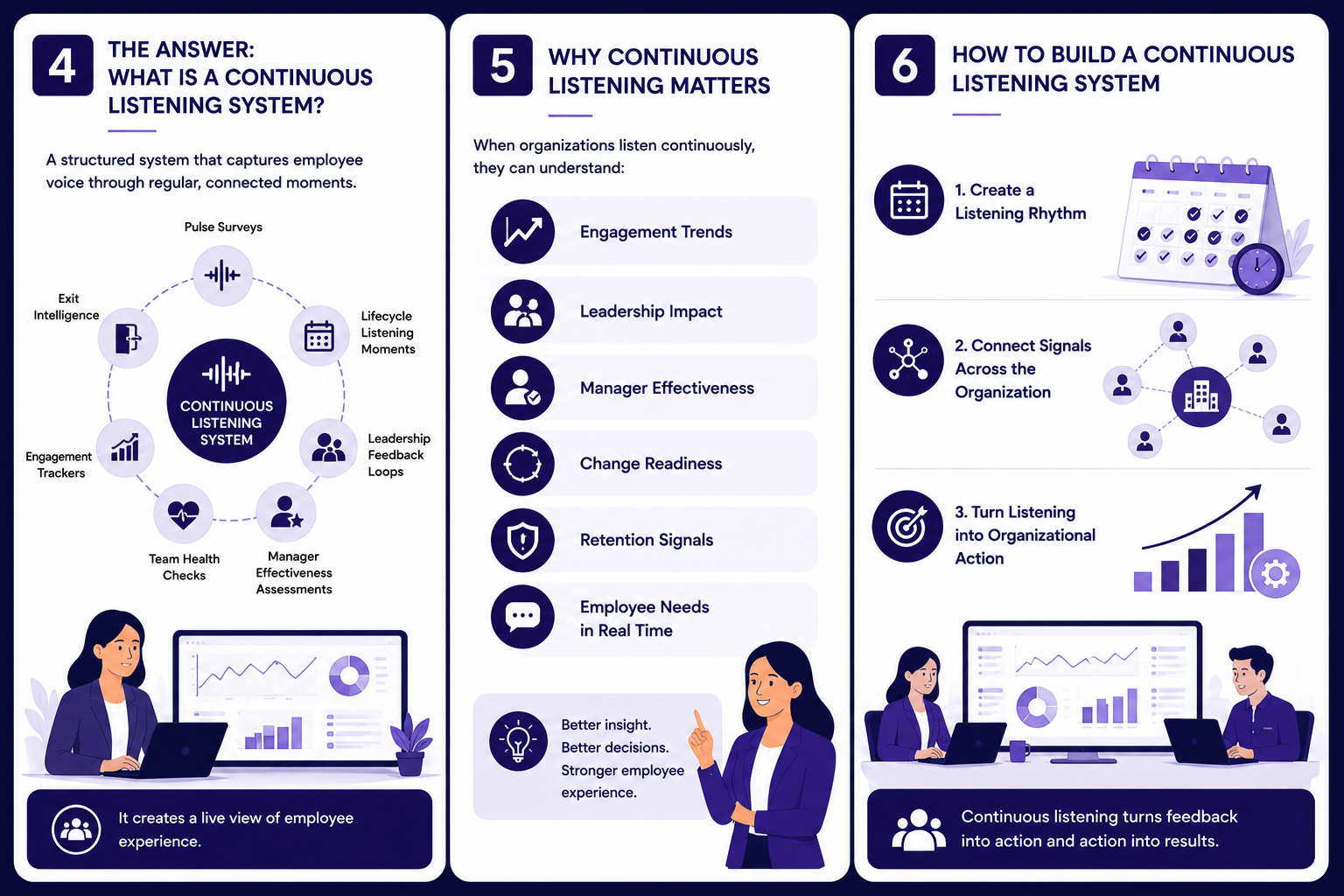
Employees feel:
- heard regularly
- understood deeply
- supported consistently
- connected to leadership
- confident that feedback matters
Organizations gain:
- stronger engagement
- better trust
- healthier culture
- earlier risk detection
- stronger leadership alignment
- lower avoidable attrition
- more agile decision-making
The organization becomes more responsive because it listens continuously.
8. The Organizational Value: Listening Becomes a Strategic Capability
Continuous listening changes employee listening from measurement to capability.
Organizations can now understand:
- what is changing
- why it is changing
- where it is changing
- who is influencing change
- what action will create impact
That transforms employee voice into business intelligence.
Listening becomes a competitive advantage.
9. The Future: Organizations That Listen Will Lead
The future of employee experience is not annual listening.
It is not reactive listening.
It is not listening only when problems appear.
The future is continuous listening.
Organizations that build continuous listening systems build:
- stronger cultures
- stronger leaders
- stronger trust
- stronger retention
- stronger employee experiences
- stronger organizations
Platforms like Lissen.io help organizations operationalize Continuous Listening Systems—connecting pulse surveys, lifecycle listening, leadership feedback, and action frameworks into one intelligent employee listening ecosystem.
Because organizations that listen continuously improve continuously.