
Measure Customer Loyalty with Net Promoter Score (NPS)
Understand how likely your customers are to recommend your brand. QaizenX® by Lissen.io helps organizations measure NPS, identify loyalty drivers, and improve customer experience.
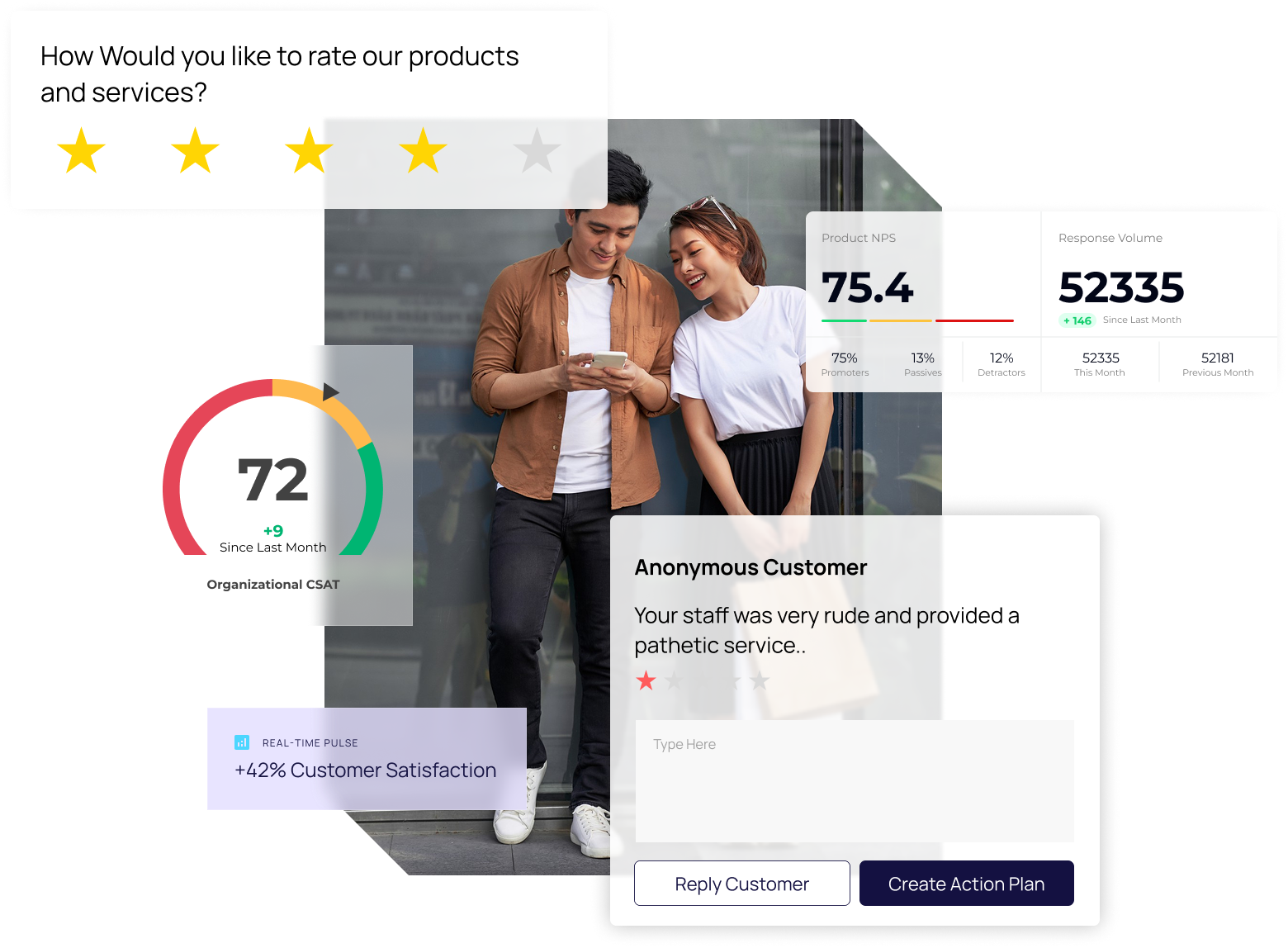
What is Net Promoter Score (NPS)?
Net Promoter Score (NPS) is a metric used to measure customer loyalty and likelihood to recommend a brand, product, or service.
It is based on a single question:
“How likely are you to recommend us to a friend or colleague?”
Customers respond on a scale from 0 to 10 and are grouped into three categories:
- Promoters (9–10): Loyal and highly satisfied customers
- Passives (7–8): Satisfied but not enthusiastic
- Detractors (0–6): Unhappy customers who may discourage others
Why NPS Matters
Customer loyalty directly impacts growth and retention. Tracking NPS helps organizations:

Loyalty Tracking
Measure long-term customer loyalty and relationship strength.

Promoter Insights
Identify promoters and detractors to understand customer advocacy.

Brand Perception
Understand how customers perceive and relate to your brand.

Churn Reduction
Reduce churn while improving customer retention strategies.
How to Calculate NPS
NPS is calculated using the following formula:
NPS = % of Promoters − % of Detractors
The final score ranges from -100 to +100.
How to Interpret NPS Scores
- Above 50 → Excellent customer loyalty
- 30 to 50 → Strong performance
- 0 to 30 → Average
- Below 0 → Indicates more detractors than promoters
NPS should be tracked over time and across customer segments to understand trends.
When to Use NPS
NPS is best used to measure overall customer loyalty and relationship strength.
It is commonly used:
- As a periodic relationship survey
- To track brand perception over time
- To compare loyalty across customer segments
- To benchmark against industry standards
Common Challenges with NPS
Organizations often face:
Measuring NPS without understanding the reasons behind it
Lack of follow-up on detractor feedback
Limited visibility across customer segments
Over-reliance on score without context
Difficulty linking NPS to actionable improvements
What Drives NPS

Overall customer experience
A seamless and positive experience across the journey strengthens loyalty.

Product or service quality
High-quality offerings build trust and encourage repeat usage.

Customer support effectiveness
Reliable and helpful support enhances customer confidence and loyalty.

Brand perception and trust
Strong brand trust plays a key role in long-term customer relationships.

Consistency across touchpoints
Consistent experiences across all interactions reinforce loyalty.

Value and expectations
Delivering consistent value and meeting expectations drives continued commitment.
How QaizenX® Helps Improve NPS
QaizenX® is the experience management platform by Lissen.io that helps organizations measure and improve customer loyalty.
With QaizenX®, teams can:
- Capture NPS feedback across customer segments
- Track loyalty trends over time
- Identify drivers of promoter and detractor behavior
- Analyze feedback alongside other experience metrics
- Take targeted actions to improve customer experience
Use Cases
Measure customer loyalty
Identify at-risk customers
Improve retention and reduce churn
Track brand perception over time
Benchmark customer experience performance
What is NPS?
NPS is a metric used to measure customer loyalty and likelihood to recommend a brand.
How is NPS calculated?
It is calculated as the percentage of promoters minus the percentage of detractors.
What is a good NPS score?
A score above 50 is considered excellent, though benchmarks vary by industry.
When should NPS be used?
NPS is used to measure overall customer loyalty and relationship strength.
What tools help measure NPS?
Platforms like QaizenX® by Lissen.io help organizations measure, analyze, and improve NPS effectively.
Start Improving Customer Loyalty
Measure, understand, and improve customer loyalty with QaizenX® by Lissen.io.