
Measure and Improve Employee Satisfaction with Clear Insights and Action
Understand how satisfied employees are with their work experience, workplace, leadership, and growth opportunities. Measure Employee Satisfaction Index (ESI), identify satisfaction drivers, uncover dissatisfaction risks, and take informed action to improve workplace experience.
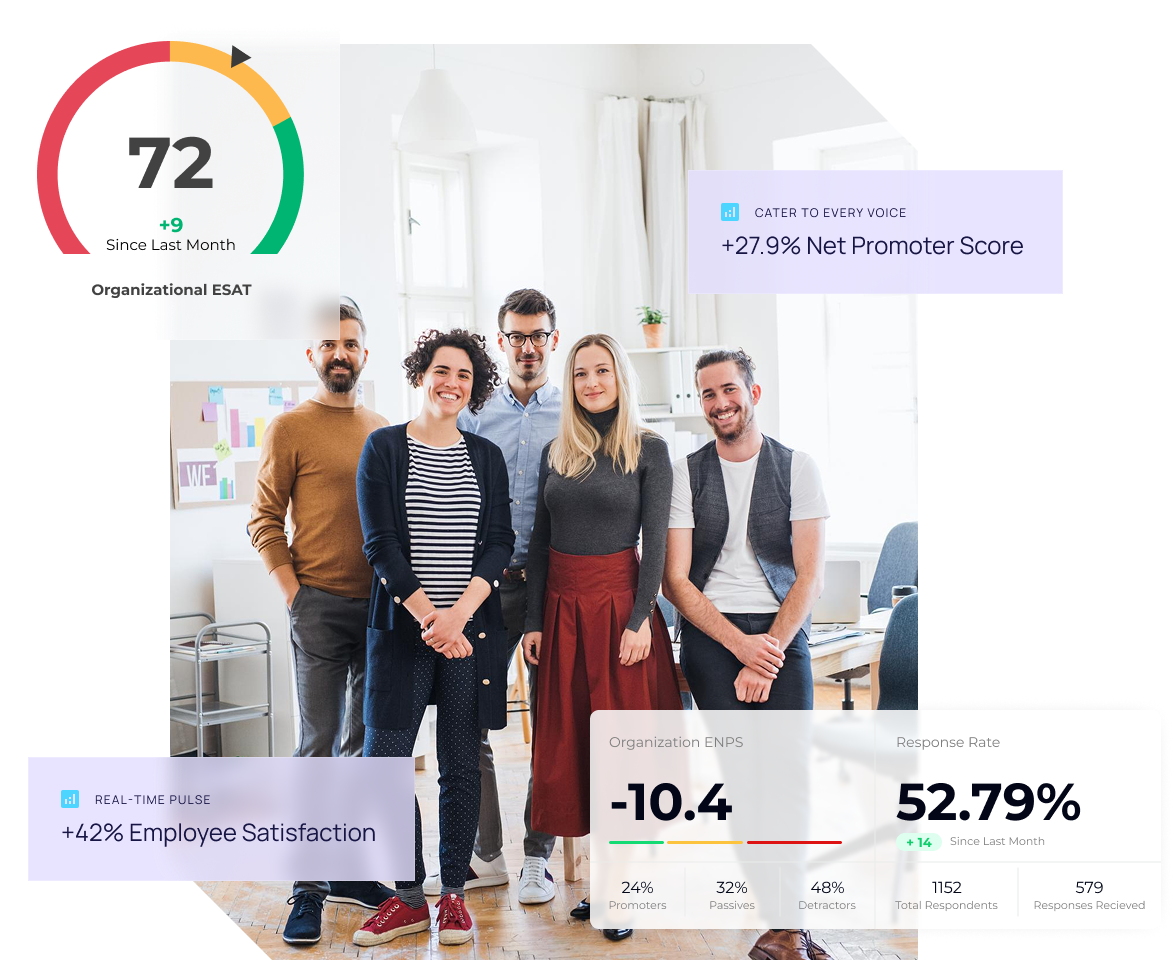
What is Employee Satisfaction Index?
Employee Satisfaction Index (ESI) measures how employees feel about their overall work experience. It evaluates satisfaction across workplace environment, leadership, communication, career growth, recognition, and organizational support to provide a comprehensive view of employee satisfaction.
Unlike engagement, which reflects emotional commitment and discretionary effort, Employee Satisfaction focuses on how well employee expectations and workplace experiences align.
Why Employee Satisfaction Matters
Employee Satisfaction impacts:

Better Employee Retention
Satisfied employees are more likely to stay with the organization and reduce voluntary turnover.

Higher Productivity
Employees who are satisfied with their work environment consistently perform better.

Stronger Employer Brand
Positive employee experiences improve reputation and attract quality talent.

Improved Customer Experience
Satisfied employees create better customer interactions and service quality.
Common Challenges in Measuring Employee Satisfaction
Organizations often face:
Measuring satisfaction across multiple workplace factors
Receiving delayed employee feedback
Low participation in surveys
Identifying dissatisfaction before employees resign
Converting survey results into improvement initiatives

How Employee Satisfaction is Measured
Employee Satisfaction Index is measured using structured surveys that evaluate key workplace experience dimensions including:
- Leadership Satisfaction
- Job Satisfaction
- Work Environment
- Career Growth Opportunities
- Recognition & Rewards
- Work-Life Balance
What Actually Drives Employee Satisfaction

Leadership and Management
Employees are more satisfied when leaders communicate clearly, support teams, and build trust.

Recognition and Rewards
Fair recognition and appreciation significantly influence employee satisfaction.

Career Growth Opportunities
Employees expect continuous learning, development, and career progression.

Compensation and Benefits
Competitive pay, benefits, and perceived fairness contribute directly to satisfaction.

Workplace Culture
Inclusive, collaborative, and respectful workplaces improve overall satisfaction.

Work-Life Balance
Flexibility and healthy workloads help employees maintain long-term satisfaction.
Key Employee Satisfaction Metrics
Employee Satisfaction Index (ESI)
Overall employee satisfaction score across the organization.
Leadership Satisfaction
Measures employee satisfaction with managers and organizational leadership.
Job Satisfaction
Evaluates satisfaction with roles, responsibilities, and day-to-day work.
Workplace Satisfaction
Measures satisfaction with work environment, policies, collaboration, and culture.
Satisfaction Trends
Track satisfaction changes across departments, locations, and time periods.
How QaizenX® Helps Improve Employee Satisfaction
QaizenX helps organizations move beyond measuring satisfaction by identifying the factors influencing employee experience and recommending targeted improvement actions.
What You Receive
- Organization-wide Employee Satisfaction Index
- Department-wise satisfaction comparison
- AI-powered satisfaction driver analysis
- Action recommendations with priority areas
- Early identification of dissatisfaction risks
Use Cases
Measure organization-wide Employee Satisfaction Index
Compare satisfaction across departments
Identify dissatisfaction before attrition occurs
Evaluate leadership satisfaction
Improve workplace experience initiatives
What is Employee Satisfaction Index (ESI)?
Employee Satisfaction Index measures how satisfied employees are with their overall workplace experience across multiple workplace dimensions.
How is Employee Satisfaction different from Employee Engagement?
Employee Satisfaction measures how employees feel about their work environment and experience, while Employee Engagement measures emotional commitment, motivation, and willingness to contribute beyond expectations.
How often should Employee Satisfaction be measured?
Most organizations measure Employee Satisfaction quarterly or bi-annually, while pulse surveys can monitor changes more frequently.
What factors influence Employee Satisfaction?
Leadership, communication, recognition, compensation, work environment, career growth, learning opportunities, and work-life balance are among the primary satisfaction drivers.
Start Improving Employee Satisfaction
Measure Employee Satisfaction Index, identify workplace improvement opportunities, and build a more satisfied workforce with QaizenX.